
1.Department of Oral and Maxillofacial Surgery
Department of Oral and Maxillofacial Surgery
Department of Anaesthesiology and Reanimation
HISTORY
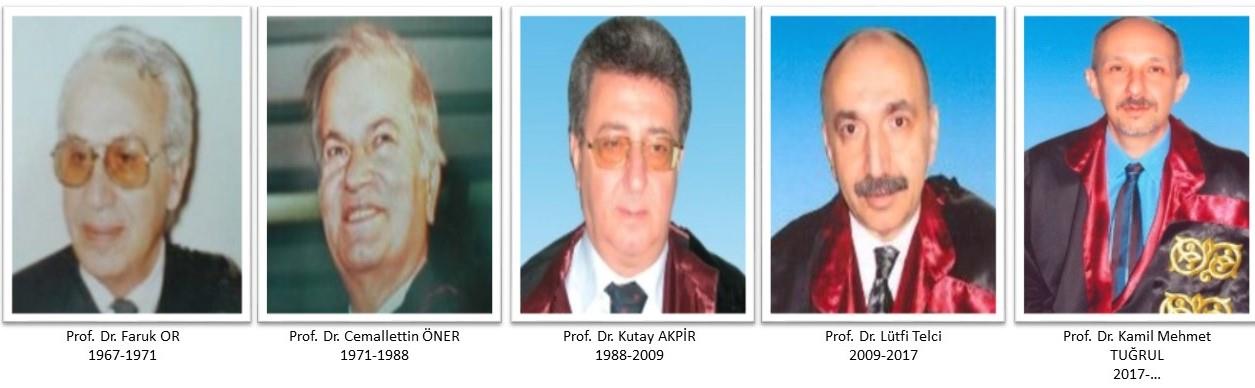
Anesthesiology and Intensive Care department of Istanbul Faculty of Medicine was founded at 1967 and first department chair appointed was Prof. Dr. Halit Ziya Konuralp who, at that period, also functioned as chair of the Department of General Surgery. Later he was replaced by Dr. Faruk Or, Ass. Prof. Anesthesiology. Dr. Cemalettin Öner, Associate Professor of Anesthesiology, joined the department in the following years and became the department chair at 1971 as he advanced to professorship. At that time, department employed three faculty- two as university lectors and one as a staff anesthesiologist- and nine residents.
The period from 1971 to 1988 witnessed great developments in terms of building departmental infrastructure, organization and modernization with Chairman Prof. Dr. Cemalettin Öner. He founded the first critical care unit of our faculty at 1971 and further developed that unit to become the most distinguished intensive care unit of that era. Besides providing graduate and postgraduate academic anesthesiology, critical care resident, nurse and paramedical staff education, the department also succeeded in getting a library. Following retirement of Prof. Dr. Cemalettin Öner at 1988, a former student of him- Prof. Dr. Kutay Akpir -was elected as chairman of the department. Kutay Akpir has retired at 2009 after 21 years of exemplary department management. His retirement has succeeded in the election of Prof. Dr. Lütfi Telci.After his retirement in 2009; Prof. Dr. Lütfi Telci was elected as the chair. Prof Telci was retired in 2017; the new chair since that time is Prof Dr Mehmet Kamil Tuğrul.
MISSION
As Istanbul University, Istanbul Faculty of Medicine, Department of Anesthesiology and Intensive Care, our mission is to cultivate highly qualified consultants of anesthesiology, critical care, and pain medicine, to provide top quality health service to patients, and to encourage scientific activity that leads clinical pathway.
VISION
As Istanbul University, Istanbul Faculty of Medicine, Department of Anesthesiology and Intensive Care, our vision is to nationally become the most prestigious center, and internationally to reach a distinguished status in providing scientific research, training consultants and state-of-the-art health service. Our indispensable values are the devotion to scientific and ethical principles, the respect of patient autonomy and rights, and the encouragement of individual initiatives with a cooperative team effort.
EDUCATION
Undergraduate Education
The Department of Anesthesiology and Intensive Care is responsible for the education of medical students in different phases of their education. Cardiopulmonary resuscitation education is provided for the medical students during their first year. Two lectures about artificial airway and basics of artificial ventilation is given by our department to 2nd year medical students. At 3rd year of the Medical School, Oxygen Therapy, Evaluation of Blood Gases Analysis and Principles of Blood Transfusion lectures were given by Anesthesia Dept. during “Respiration” and “Blood” modules respectively. Basics of anesthesia, intensive care and pain medicine is part of core curriculum of 5th year medical students. These students receive 23-hour lectures and 5 day hands-on practice in operating rooms, intensive care units and pain clinic. This curriculum is repeated every six weeks for new students.
Postgraduate Education
Residents are provided with a 5-year detailed training program, a handbook for beginners, an annual education program, and a logbook.
The Anesthesiology and Intensive Care Residency program lasts five years. This duration includes rotations in other clinics such as Cardiology, Pulmonology and also in all surgical disciplines according to their experience as well as General ICU, Neurosurgical ICU and Emergency Department.
The weekly Clinical Training Meeting (A resident and staff joint meeting held on Wednesday mornings that includes seminars, ideas for improvement, and theoretical and practical education)
Journal Club (once per month), Seminars (on Wednesday and/or Thursday mornings) and daily lectures and discussion of preoperative visits at each rotation are some examples of structured educational activities. Additionally each resident must complete “CPR”, “Difficult Airway”, “Peripheral Nerve Blocks”, “Intraoperative Mechanical Ventilation” and “Trauma” courses before graduation.
SERVICE
The clinic is widely spread and well integrated inside the university hospital complex. It includes 6 different buildings with 40 operation rooms, 5 intensive care units, a pain medicine ward and numerous remote locations for various interventional and diagnostic procedures.
The department provides medical service to 40 in- and out-patient surgical rooms and approximately 25000 patients per year. Intensive care unit has 16 beds and treats 1000-1200 patients/year. Pain clinics treats approximatively 3000 in- and out-patients /year.
Furthermore, department faculty is responsible in management of Neurosurgical Intensive Care, Emergency Surgical Intensive Care and Orthopedics Intensive Care Units. Department has also appointed an anesthesiology preoperative clinic primarily dedicated to provide anesthesiology consultancy for out-patient surgery since 1990 and 10000 patients per year have pre-anesthetic evaluation.
CONTACT
Phone number: 90 212 6318767
Email : itfanesteziyoloji@istanbul.edu.tr
website: www.itfanestezi.net
Department of Brain and Nerve Surgery (NEUROSURGERY DEPARTMENT)
Academic Staff
Our Neurosurgery Department, the fırst academic neurosurgery department in Turkey, was founded in 1952 by Prof. Bülent Tarcan. At the time. Prof. Tarcan was a member of the general surgery faculty. He was trained in the departments of Mr. Northfıeld in England and Prof. Penzholz in Germany.
Our mission is to introduce students of medicine to modern neurosurgery, provide vvorld ciass residency training and to provide our patients with the best and iatest treatments.Our vision is to be the best in the fıeld of neurosurgery, to produce novel know!edge and to share our knowledge with patients and the academic world. Our department was accredited with the Eıtropean Assocİation of Neurological Surgery (EANS - JRAAC) in 2006, and this accreditations has been renewed in 2015.
Currently, with four professors, three associate professors, three fellows, 10 residents and supported by dedicated neurointensive care and endovascular units, our department offers best and İatest treatment options in every fıeld of neurosurgery including vascular and endovascular neurosurgery, neurooncology, spinal surgery, pediatric neurosurgery, trauma surgery, movement disorders surgery, epilepsy surgery and pain surgery.
Department of Pediatric Surgery
Academic Staff
General Surgery - Department
Academic Staff
Thoracic Surgery
Academic Staff
Department of Ophthalmology
Academic Staff
HISTORY
Istanbul University comprised only one medical faculty until May 1960 and the ophthalmology clinic was within the Cerrahpaşa campus with the clinical head being Ord. Prof. Dr. Naci Bengisu. In 1965, Istanbul Medical Faculties were reorganized and two separate medical faculties were established, namely Istanbul Medical Faculty and Cerrahpaşa Medical Faculty. The Department of Ophthalmology of Istanbul Medical Faculty was established in the “Çapa” campus by Prof. Dr. Naci Bengisu and Doç. Dr. Demir Başar. Dr Muhsin Kaya İdil was the first fellow and Drs Fazıl Sezen and Aydın Uygur were the first residents. Later on, Dr Ünal Bengisu, and residents Dr Meri Urgancıoğlu and Dr Turan Sezen joined the staff. This basic crew of Çapa worked in great harmony and had great success both nationwide and abroad for many years. In five years, the divisions of Retina and Angiography, Glaucoma, Orthoptics, Contact Lens were started.
Following the retirement of Prof Dr Naci Bengisu in 1973, Prof. Dr. Demir Başar became the Department chair and he was followed by Prof. Dr. Muhsin Kaya, Prof. Dr. Fazıl Sezen. In 1986, Prof. Dr. Demir Başar returned to the clinic as Department chair and following his retirement in 1995, Prof. Dr. Fazıl Sezen, Prof. Dr. Ahmet Gücükoğlu, Prof. Dr. Koray Akarçay and Prof. Dr. Belgin İzgi acted as Department chairs, successively. Currently, Prof. Dr. Nilüfer Gözüm is the acting department chair. At present, the academic staff consists of 3 professors, 5 associate professors and 2 assistant professors.
In 2020, analyses and tests revealed that the old building was not resistant to earthquakes and it was demolished. The Department of Ophthalmology moved to the Istanbul Medical Faculty Eye and Ear Hospital in the Vatan Campus in October 2020.
MISSION
The missions of the Department of Ophtahlmology are to train qualified ophthalmologists and to provide high standard and state-of-the-art healthcare services for our patients.
VISION
We aim to be a clinic that provides high quality healthcare including the most current practices in the field of ophthalmology and to train qualified ophthalmologists with a strong background, a comprehensive approach, good bedside manners and work ethic, diligent and accurate patient examination, treatment and follow-up.
EDUCATION
Ophthalmology is included in the curiculum of 3rd and 5th grades of our Medical Faculty within the Sensory Division and lessons are in the form of both lectures and clinical practice.
Post graduate education includes lectures, case presentations, journal club and discussions on Wednesdays and Fridays at 8.00-9.00 p.m.
HEALTH CARE SERVICES
Our clinic provides outpatient and in-patient services with a very busy schedule. In addition to our General Outpatient Clinics, we have divisions that provide service in specialized areas of ophthalmology, namely the divisions of Retina, Glaucoma, Ocular Inflammation, Cataract, Cornea, Refractive Surgery, Stabismus and Pediatric Ophthalmology, Ocular Oncology and Oculoplastics. These divisions are run by faculty with great experience and are centers of referral both nationally and internationally. Similarly, in addition to standard surgery, many specialized and challenging surgeries are performed in the operating theater of our clinic.
CORRESPONDANCE
Tel: +90 212 414 20 00
Ext.: 38121 – 38122
Fax: 0212 589 5951
E-mail: itfgoz@istanbul.edu.tr
URL: http://www.istanbul.edu.tr/itf/goz/
Department of Gynecology and Obstetrics
Academic Staff
DIVISIONS OF DEPARTMENT OF OBSTETRICS AND GYNECOLOGY
1. Head of Division of General Gynecology Prof. Dr. Halil SAYGILI
2. Head of Division of Gynecological Oncology Prof. Dr. Samet TOPUZ
3. Head of Division of Perinatology Prof. Dr. Recep HAS
4. Head of Division of Reproductive Endocrinology and Infertility Prof. Dr. Cemil
AKGÜL
5. Head of Division of Urogynecology Prof. Dr. Süleyman Engin AKHANHISTORY
HISTORY
During the Ottoman Empire, the first medical faculty was established in 1827 and Obstetrics and Gynecology classes were also started to be taught. The language of education was French. In 1867, the first civil medical school was opened and Turkish Obstetrics and Gynecology courses were given by Mehmet Vahit. In 1887, Besim Ömer Pasha was sent to France and started training in modern Obstetrics and Gynecology. Gülhane Medical School was established in 1898 and the Gynecology Clinic was established by Asaf Derviş in 1902. Operator Doctor Cemil Pasha (Cemil Topuzlu) started the first gynecology surgeries in our country in 1900. As military and civil medical schools united in 1908, three clinics related to Obstetrics and Gynecology were established.
1) Asaf DerviŞ Gynecology
2) Besim Ömer Obstetrics
3) Both Obstetrics and Gynecology at Refik Münür Gülhane Medical Academy
The first pathology laboratory was established within the Faculty of Medicine in 1925 and the first radium application in cervix cancer in 1926 was initiated by Dr. Tevfik Remzi Kazancıgil.
The history of our clinic begins in 1933, when Prof. Dr. W. Liebman, one of the university professors who left Nazi Germany, was appointed as the clinical director during the University Reform. Associate Prof. Dr. Tevfik Remzi Kazancıgil from Darülfünun's staff and Dr. Niyazi Müştak who works in Konya maternity hospital, were appointed as deputy clinical directors.
The faculty clinics of Istanbul University Faculty of Medicine were initially distributed to various hospitals such as Vakıf Guraba, Haseki, Cerrahpaşa, Şişli, Bakırköy, and then it was decided to gather in Guraba and Cerrahpaşa hospitals. In order to serve in more modern conditions, it was decided to establish a second Obstetrics and Gynecology Clinic under the leadership of Prof. Dr. W. Liebman in a section used as a tobacco warehouse owned by the Foundation Administration. The four-wall tobacco warehouse was transformed into a modern clinic with the drawing of architect Zimmerman, one of the professors of the Academy of Fine Arts, the necessary tools and books were ordered from Germany, but Prof. Dr. W. Liebman died of vertebral sarcoma in 1939 before seeing the opening of the clinic.
During this time, Prof. Dr. Remzi Kazancıgil and his residents rushed between Haseki and Guraba to give lectures. After a three-year pause, the second Obstetrics and Gynecology Clinic was opened in 1942. Associate Prof. Dr. Naşit Erez was appointed as the deputy clinical director. During this period, there was only one resident in the clinic, no midwife was working, and 14 personnel were employed on a diary. 275 patients were examined annually, 25 major and 55 minor surgeries were performed. In 1943, sterilization devices and operating tables previously ordered from Germany were taken into the clinic. In 1944, Associate Prof. Dr. Ertuğrul Yenen was appointed to the clinic as a faculty member. In the same year, Associate Prof. Dr. Naşit Erez, who worked in the clinic for many years as a deputy clinical director, was promoted to the position of Professor and became the full clinical director. Between 1944-1946, Williams Charles Nixon from England worked with Prof. Dr. Naşit Erez.
Since 1944, there has been a continuous development including clinical, academic, about staff, building, education, patient care and treatment and scientific studies.
In 1953, Naşit Erez, Ertuğrul Yenen and Kazım Arısan published a student book called Propödetik.
IN-CLINICAL UNITS
The neonatal pediatric department was separated in the clinic and this unit remained under the control of obstetricians for the first 10 years, but since 1952, with the appointment of pediatrician Dr. Sami Hamdi Uçar, it was transferred to the control of pediatricians. It started to work as an exemplary service in a short period of time.
In 1952, the first BCG vaccine application for newborns was initiated in this service.
For the diagnosis and treatment of blood incompatibility cases, a hematology laboratory was established within the clinic and the first exchange transfusion in our country was done in our clinic. In the clinic, histopathology laboratory was established in 1943 by Dr. W. Laqueur and then the gynecologic pathology department was led by Prof. Dr. Ertuğrul Yenen and Prof. Dr. Orhan Esen. An x-ray laboratory was established in the clinic in 1946, after a short training due to the lack of technicians, films were shot by gynecology residents, and then technicians and radiology doctor İsmet Soydan started to work in the clinic. A photography workshop was established under the leadership of Dr. Mehmet Başat who is also keen on photography in the clinic and photographies and films of the surgeries have started to be taken. In fact, some surgical films were shown by Prof. Dr. Naşit Erez at the congress held in Geneva in 1959. The Photography Workshop was later taken over by Dr. Turgut Ucak. In our clinic, anesthesia was given by obstetricians for many years under the supervision of an anesthesiologist. Although the biochemistry studies in the clinic were carried out by Dr. Samim Mostar and Dr. Güzin Bosut, the main laboratory became operational in 1961. The first hormone laboratory in our clinic was established in the 1960s by Dr. Orhan Erözden, who went to Paris and worked with Prof Dr. Jayle. In the same years, cytological examinations were performed by hiring two expert laboratorians in the clinic. The first clinical library was established in 1945, and clinical seminars chair committee meetings started to be held in the library hall. Library clerk Şermin Sadak ensured that the books were used with great care. In 1944, in accordance with the regulations in the clinic, archiving procedures were carried out with the card index system used at the University of Leipzig. In addition, a room in the clinic has been arranged to contain the pictures of the faculty members who have served in the Department of Obstetrics.
The name of our clinic, which was founded in 1933, has changed three times since that day. Since its establishment as the second Obstetrics and Gynecology clinic of the Istanbul University Faculty of Medicine from the beginning until 1961, its name was the ‘‘Second Obstetrics and Gynecology Clinic’’. After that the name changed to ‘‘Çapa Obstetrics and Gynecology Clinic’’ due to the location of the campus being in Çapa. And finally, with the establishment of the Cerrahpaşa Faculty of Medicine in 1967, as the only Obstetrics and Gynecology Clinic of the Istanbul Faculty of Medicine, it was named “Istanbul Faculty of Medicine Obstetrics and Gynecology Clinic”. The Obstetrics and Gynecology clinic, which has been serving in the present Pulmonary Medicine building for many years, has been moved to its new location with the completion of the Surgical Monoblock building. In 1991, Gynecological Oncology, Gynecology, Reproductive Endocrinology and Perinatology divisions were established within the department.
Currently, 9 professors, 4 associate professors, 2 specialists, 7 fellows and 22 residents are working in our clinic.
Our professionals who have contributed intensively to our clinic since its establishment are as follows;
Ord Prof Dr W Liepman
Ord Prof Dr Naşit Erez
Prof Dr Williams Charles Nixon
Prof Dr Ertugrul Yenen
Prof Dr Kazim Arısan
Prof Dr Ercüment Bora
Prof Dr Samim Mostar
Prof Dr Orhan Esen
Prof Dr Cevat Babuna
Prof Dr Orhan Erözden
Prof Dr Fazıl Faith
Pof Dr Ismet Narter
Prof Dr Turgut Aircraft
Prof Dr Yilmaz Deniz
Prof Dr Yalçın Eğeci
Our clinic draws attention as one of the departments entered with the highest score in the Medical Specialty Examination (TUS) among Obstetrics and Gynecology clinics for many years in Turkey. In addition, our clinic has been accredited for specialist training in the Obstetrics and Gynecology branch three times in 2008, 2013, and 2018 under the European Board and College of Obstetrics and Gynecology affiliated to the European Union of Medical Specialists. Accreditation was renewed in 2013 and 2018.
The following divisions are present in our department:
Division of General Gynecology
In this division, where all problems related to gynecology are evaluated, diagnosed, and treated, outpatient services are provided by general and emergency gynecology clinic, menopause clinic, adolescent gynecology clinic, outpatient clinics for sexual disorders and chronic pelvic pain clinic. Procedures requiring intervention are performed under local anesthesia in the outpatient clinic or as an outpatient service or under general anesthesia in the operating room. The Division of General Gynecology performs all gynecological minimal invasive and laparoscopic surgical interventions as well as all gynecological surgical interventions in addition to outpatient services.
Division of Urogynecology
Urogynecology Unit, which was established in 1995, took the title of Division in Istanbul Faculty of Medicine, Obstetrics and Gynecology Department in 2011 for the first time in Turkey. In the Urogynecology Division, services are provided for pelvic floor problems such as urinary incontinence, fecal incontinence, genital organ prolapse, chronic pelvic pain and sexual dysfunction. Outpatient clinic services, urodynamic examinations, physical therapy applications for the pelvic floor, laser applications and surgical interventions are performed within the body of the division.
Division of Gynecological Oncology
Screening and diagnosis of gynecological organ originated cancer or precursor lesions that may turn into cancer, and their treatment and follow-up are performed. Our clinic is one of the 20 accredited centers in Europe for ovarian cancer. Gynecological Oncology branch has ESGO (European Society of Gynecological Oncology) certification since 2013.
The diagnosis and treatment of all patients are carried out in coordination with the Medical Oncology and Radiation Oncology departments of our university's Oncology Institute and our faculty's Pathology, Nuclear Medicine and Radiodiagnostic Departments. Gynecological Oncology and Colposcopy outpatient clinic serves every day in our clinic.
Division of Reproductive Endocrinology and Infertility
Outpatient clinics of this discipline serve every day of the week, and after the factors such as infertility etiology and the patient's age are evaluated, assisted reproductive treatment methods such as ovulation induction, intra-uterine insemination, in vitro fertilization, and embryo-sperm freezing are performed after determination of suitable indications. In this division, necessary investigations are carried out for patients who apply due to a history of recurrent miscarriage, and necessary medical and surgical treatments are applied if an underlying pathology is detected. On the weekly operating days, endoscopic interventions such as hysteroscopy and laparoscopy and other necessary surgical procedures are performed for gynecological conditions that may prevent pregnancy or affect pregnancy outcomes in infertility patients.
Division of Perinatology
Our services in clinics affiliated to this branch of science are generally carried out in coordination with other internal, pediatric and surgical sciences. These services; routine pregnancy follow-up and delivery, follow-up, management and delivery of high-risk pregnancies, diagnosis and management of maternal and fetal diseases.
Many procedures and tests are applied in our clinic in order to provide these services. These are; 11-14 weeks screening test (dual screening test), 16-20 weeks screening tests, 18-22 weeks detailed fetal ultrasonography, genetic sonography, fetal echocardiography (intrauterine congenital heart disease diagnosis), maternal and fetal color Doppler examination, chorionic villus biopsy (CVS) (sampling from the fetus’ placenta), amniocentesis (AS) (sampling from the fetus’ amniotic fluid), cordocentesis (CS) (taking blood from the fetus's umbilical cord), fetal blood transfusion (direct blood supply to the fetus in families with blood incompatibility or in the presence of anemia due to infection in the fetus), embryo reduction (reduction of pregnancies with triplet or more embryos to twin or single pregnancy depending on the situation), selective fetal reduction (stopping the life of the problematic fetus intrauterine in multiple pregnancies), fetocide (stopping fetus’ heartbeat before medical evacuation in fetuses with anomalies), amniodrainage (in case of excessive amniotic fluid accumulation, controlled amniotic fluid drainage from amniotic sac of the fetus in order to prevent a possible premature birth), fetoscopic surgeries (surgical interventions for the fetus or fetuses in the uterus with endoscopic methods), vesicoamniotic shunt (shunting between the bladder-amniotic sac in fetuses with bladder outlet obstruction), thoracoamniotic shunt (shunt application between fetal rib cage and amniotic sac when fluid accumulates in the rib cage of the fetus), radiofrequency ablation and intrafetal laser application (selectively stopping the heartbeat of one of the fetuses in identical twins).
In addition to these, in our Perinatology clinic, every week on certain days, congenital anomalies in various systems such as heart, kidney, brain and skeleton detected in the fetus are consulted synchronously with the Department of Pediatric Cardiology, Pediatric Urology and Clinical Genetics and scientific consultancy is provided.
On certain days of the week, identical twin pregnancies, pregnancies with Rh-Rh incompatibility, pregnant women diagnosed with Diabetes Mellitus are regularly monitored both in our pregnancy outpatient clinic and in the Prenatal Diagnosis and Treatment Unit. Pregnancy-related diseases (Systemic Lupus Erythematosus, Chronic Kidney Failure, Preeclampsia, Transplant patients, etc.) are managed with a multidisciplinary approach.
In addition, various obstetric operations such as follow-up and cerclage operation (suture placed in the cervix) for patients with a history of cervical insufficiency, also various obstetric operations such as cesarean hysterectomy operation in placenta invasion (adhesion) anomaly (placenta accreta) in pregnancies with previous uterine surgery, is also carried out with experienced anesthesia team.
In the delivery room, there is an intermediate intensive care unit for expectant mothers where high-risk pregnancies are closely monitored (preterm birth threat, preeclampsia), and our faculty has a Neonatal Intensive Care Unit managed by a highly experienced team.
MISSION-VISION
Our clinic’s purpose is to conduct researches about women’s health in order to expand the range of knowledge, to share them on national and international platforms, to train new personnel, doctors and scientists to specialize in this field and to ensure that all applicants have access to standard treatment and care without discrimination, in the light of the latest developments, by informing them about the spread of preventive medical measures as well as to apply the third-line treatments of patients.
EDUCATION
Our department gives theoretical and practical courses on Gynecology and Obstetrics to the third and fourth grades of the medical faculty. Medical faculty senior students (Intern Doctors) complete a 2-month rotation in our clinic.In addition, the faculty members of our clinic contribute to the education of the physical therapy and rehabilitation college and college of nursing.
CERTIFICATE PROGRAMS
Our Department of Infertility and Reproductive Endocrinology is one of the centers that can give IVF certificate, which is approved by the Ministry of Health and is given to Obstetricians and Gynecologists.
GENERAL PROCESS CASTING
A total of 58 nurses and 15 assistant personnel work in all places where our department is served.
CONTACT
Tel +90 212 414 20 00 – 31487
Fax +90 212 635 26 75
URL http://www.itfkd.com